Notes
|
Topics to be learn :
|
Introduction: Why Do We Separate Substances?
Sant Kabir's Wisdom :
Couplet: साधु ऐसा चाहिए जैसा सूप सुभाय। सार सार को गहि रहै थोथा दई उड़ाय।।
Meaning: Just as a winnowing basket removes the light husk and keeps the useful grains, wise people should keep good qualities and leave bad qualities.
Scientific Connection: In the same way, we separate useful substances from unwanted impurities by using their different physical properties.
Mixture:
Mixture : A mixture is formed when two or more substances are mixed together.
Examples:
- Stones and husk mixed with wheat or rice.
- Salt mixed in water.
- Sawdust mixed with iron nails.
Two Main Purposes of Separation
(1) To Remove Unwanted Substances : Sometimes, a mixture contains substances that are not useful. We separate and remove these unwanted substances.
Examples:
- Removing stones from pulses and rice.
- Removing husk from grains.
- Separating bran from flour.
- Removing tea leaves from tea.
- Removing seeds from watermelon.
- Removing green chillies from poha.
(2) To Separate Two Useful Substances : Sometimes, both substances in a mixture are useful. We separate them to use each one separately.
Examples:
- Separating butter and buttermilk from curd.
- Obtaining salt from seawater and water by condensation.
- Separating iron scrap and other waste for recycling.
Remember: Separation helps us remove unwanted materials or obtain useful substances from a mixture.
The Methods of Separation:
Handpicking :
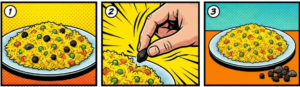
Handpicking : The method of picking by hand certain components from a mixture, such as small stones and husk from wheat and rice, is called handpicking.
Basis of separation : Differences in size, colour and shape of the particles.
When is it suitable? :
- When the particles to be removed are present in small quantities.
- When they can be easily picked by hand.
Examples :
- Picking small stones and husk from wheat/rice (Nani, Mama, Mami in the courtyard).
- Malli picking whole black peppers out of vegetable pulao (Fig.).
- Taking out green chillies from cooked dalia or poha; seeds from watermelon; picking marigold flowers from a heap of mixed flowers.
- Carpenter first tried picking iron nails out of sawdust by hand (before using a magnet).
Limitation :
- Slow and tiring for large quantities (Valli wonders how long farmers would take to handpick grains from a huge pile of husk), so other methods are needed.
Threshing:
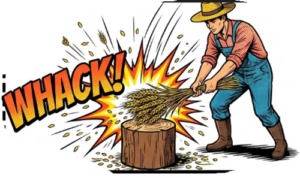
Threshing: Threshing is the process of separating grains from harvested stalks by beating them.
How Is Threshing Done?
- Farmers dry the harvested wheat stalks in the sun.
- Each stalk has many grains attached to it.
- Farmers beat the dried stalks on a large wooden log to separate the grains.
- After threshing, the grains are mixed with husk.
- Winnowing is then used to separate the lighter husk from the heavier grains.
- Farmers sometimes sing folk songs while doing this work.
Modern Threshers:
- Modern machines called threshers are used to separate grains from stalks.
- They can also separate husk from grains.
- They perform threshing and winnowing at the same time.
Remember: Threshing separates grains from stalks, while winnowing separates grains from lighter husk.
Winnowing:
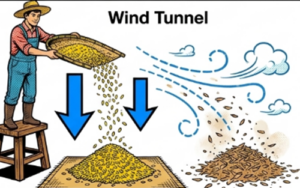
Winnowing: Winnowing is the method of separating heavier and lighter components of a mixture using wind or blowing air.
How Do Farmers Winnow?
- Farmers use a traditional bamboo tray called a soop.
- The farmer stands on a raised platform and holds the tray containing grains.
- The tray is moved in the direction of the wind.
- The heavier grains fall straight down and collect in a heap.
- The lighter husk is carried away by the wind.
- Thus, grains and husk get separated.
Remember:
- Winnowing requires moving air.
- It cannot be done in a closed room without airflow.
- If there is no wind, we can use a fan or hand fan to create airflow.
Example: Separating husk from wheat or rice grains by wind is called winnowing.
Sieving:
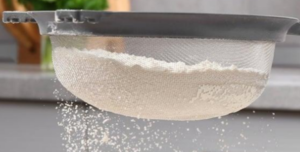
Sieving: Sieving is the process of separating solid particles of different sizes using a sieve.
How Does Sieving Work?
- A sieve is a tool with small holes called pores.
- Smaller particles pass through the holes.
- Larger particles remain on the sieve.
- This method is used to separate solid particles of different sizes.
Examples:
- Flour: Fine flour passes through the sieve, while bran and small stones remain behind.
- Construction sites: Sieves are used to separate small sand particles from larger pebbles and stones.
Remember: If the holes of the sieve are larger than all the particles, everything will pass through and no separation will take place.
Evaporation:
Evaporation: Evaporation is the process in which a liquid changes into vapour.
It is used to separate a solid dissolved in a liquid. Example: Separating salt from saltwater.
How Is Salt Obtained from Seawater?
- Seawater contains salt and other substances dissolved in water.
- Seawater is collected in shallow pits.
- These pits are exposed to sunlight and air.
- After a few days, the water evaporates completely.
- A mixture of solid salts is left behind.
- Common salt is obtained after further purification.
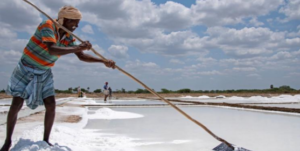
Real-Life Examples of Evaporation:
- White Patches on Dark Clothes:
- Sweat contains water and dissolved salts.
- In summer, water evaporates from clothes.
- White salt patches are left behind.
- Ayurveda:
- Herbs, roots, leaves, flowers and seeds are dried in the shade.
- Their excess water evaporates.
- The useful plant material remains.
Did You Know?
- Sambhar Lake in Rajasthan is an important natural source of common salt in India.
Difference Between Sieving and Evaporation:
| Sieving | Evaporation |
| Separates solid particles of different sizes. | Separates a dissolved solid from a liquid. |
| Uses a sieve. | Uses evaporation of the liquid. |
| Example: Separating bran from flour. | Example: Obtaining salt from seawater. |
Sedimentation and Decantation:
Sedimentation:
Definition: Sedimentation is the process in which heavier, insoluble solid particles settle down at the bottom of a liquid when the mixture is left undisturbed for some time.
- The solid particles that settle at the bottom are called sediment.
- Example: Mud particles settle at the bottom when muddy water is left undisturbed.
Decantation:
Definition: Decantation is the process of gently pouring the clear upper liquid into another vessel without disturbing the settled solid particles.
Examples and Applications:
- Washing Rice and Pulses: Mud and dust settle at the bottom, and the dirty water is gently poured out.
- Separating Tea Leaves: Most tea leaves can be separated from tea by carefully pouring the tea into another cup.
- Separating Oil and Water: Oil floats on water and forms a separate upper layer. It can be gently poured out.
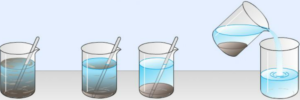
Limitation of Decantation:
- Decantation cannot completely separate very fine suspended particles.
- Some fine mud particles or tea leaves may still mix with the liquid while pouring.
Difference Between Sedimentation and Decantation:
| Sedimentation | Decantation |
| Heavier solid particles settle at the bottom. | Clear upper liquid is poured into another vessel. |
| The mixture is left undisturbed. | The container is tilted gently. |
| The settled solid is called sediment. | The settled solid is left behind. |
Remember: Sedimentation means settling down, while decantation means pouring out the clear liquid.
Filtration:
Filtration: Filtration is the process of separating insoluble solid particles from a liquid by passing the mixture through a filter.
The filter allows the liquid to pass through but traps the solid particles.
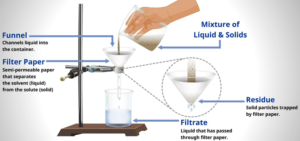
Important Terms
- Residue: The insoluble solid particles left behind on the filter.
- Filtrate: The liquid collected after passing through the filter.
Different Types of Filters:
Filters have different-sized holes (pores). Smaller pores can trap finer particles.
- Tea Strainer: It has large holes and separates tea leaves from tea. It cannot stop very fine mud particles.
- Woven Cloth: It has smaller pores than a tea strainer. Folding the cloth into layers makes the pores smaller.
- Filter Paper: It has very fine pores and can separate fine mud particles from water. It is folded into a cone and placed inside a funnel.
- Natural Filters: Cotton, charcoal and layers of sand can also be used as filtering materials.
Everyday and Real-Life Examples
(1) Tea Bags:
- Earlier, tea bags were made using silk cloth.
- Later, muslin cloth, gauze and filter paper were used.
- These materials allow tea to pass through while keeping tea leaves inside.
(2) Fishing Nets:
- Fishing nets work like filters.
- Water passes through the holes of the net.
- Fish get trapped in the net.
- Unfortunately, plastic waste like bags, straws and bottles can also get trapped in fishing nets.
Remember: Filtration is useful for separating insoluble solids from liquids.
Churning:
Churning: Churning is the process of rotating or stirring a liquid mixture rapidly to separate lighter fat particles from the liquid.
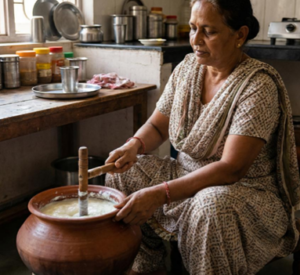
How Does Churning Work?
- Curd or cream is stirred rapidly using a churner.
- The fat particles join together to form butter.
- Butter is lighter and floats on the top.
- The heavier liquid called buttermilk (chhach) remains below.
- Thus, butter and buttermilk are separated.
Tools Used for Churning:
- Traditionally, a wooden churner called mathni is used.
- Nowadays, electric mixers, blenders and hand beaters are also used.
Did You Know? : A traditional painting at a dhaba in Bhopal, Madhya Pradesh, shows the use of a wooden churner for making butter.
Remember: Churning separates butter from curd or cream by rapid stirring.
Magnetic Separation:
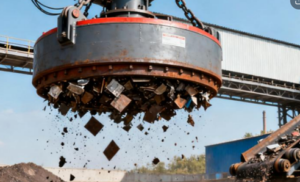
Magnetic Separation: Magnetic separation is the method of separating magnetic substances from non-magnetic substances using a magnet.
How Does Magnetic Separation Work?
- Some materials are attracted towards a magnet.
- These materials are called magnetic substances.
- Other materials are not attracted towards a magnet. They are called non-magnetic substances.
- A magnet attracts the magnetic materials and separates them from the mixture.
Examples:
(1) Separating Iron Nails from Sawdust:
- A carpenter may accidentally drop iron nails into sawdust.
- A magnet is used to attract and collect the iron nails.
- Sawdust remains behind.
(2) Recycling Industries:
- Large electromagnets are fitted to cranes.
- They attract iron scrap from heaps of waste.
- The collected iron is sent for recycling.
Examples of Magnetic and Non-Magnetic Materials
| Magnetic Materials | Non-Magnetic Materials |
| Iron | Wood |
| Nickel | Plastic |
| Cobalt | Sawdust |
| Sand |
Remember:
- Iron, nickel and cobalt are magnetic materials.
- Wood, plastic, sawdust and sand are non-magnetic materials.
- Magnetic separation is useful in homes, workshops and recycling industries.
We reply to valid query.