Solutions (Exercise + Intext)
Intext Exercises :
Part A: Solutions to 'The Big Questions' (Page 125)
Question 1: What is the concept of justice?
Justice is the fundamental principle of fairness, equality, and righteousness in a society. It ensures that every individual is treated with dignity, protected against arbitrary harm, and granted their rightful legal and moral entitlements under the Constitution.
Two vital dimensions of justice:
- Substantive Justice: Focuses on the final result or outcome of a case. It examines whether a decision is intrinsically fair, just, reasonable, and aligned with constitutional rights and human dignity.
- Procedural Justice: Focuses on the process by which a decision is reached. It guarantees that every party receives a fair hearing, equal opportunity to present evidence, unbiased trial conditions, and the benefit of the legal presumption of innocence until proven guilty.
Question 2: Why is it important for a just and harmonious society?
Justice is the bedrock of societal peace, stability, and democratic harmony. As Dr. Martin Luther King Jr. famously stated, "Injustice anywhere is a threat to justice everywhere." Justice is essential for several key reasons:
- Prevention of Arbitrary Power: It ensures that the rule of law prevails over brute force, money power, or executive overreach, guaranteeing that no individual or authority is above the law.
- Safeguarding Dignity & Equality: It protects vulnerable and marginalized citizens from discrimination based on caste, gender, religion, or economic status, fulfilling the Preamble's promise of social, economic, and political justice.
- Peaceful Dispute Resolution: It provides an institutional mechanism to resolve conflicts peacefully, preventing citizens from taking the law into their own hands or resorting to violence.
- Sustaining Public Trust: When citizens believe that grievance redressal is accessible and impartial, social cohesion and civic cooperation flourish.
Question 3: What is the structure and role of the judiciary in India?
India possesses a single, integrated, and independent judicial system arranged in a clear 3-tier hierarchy:
- Supreme Court of India (Apex Level): Located in New Delhi, established on January 26, 1950 (Article 124). It is led by the Chief Justice of India (CJI) alongside 33 judges (33+1). It serves as the highest court of appeal, final interpreter of the Constitution, and custodian of Fundamental Rights.
- High Courts (State Level): Head of the judicial administration in a State (Article 214). Currently, there are 25 High Courts across 28 States, as some High Courts exercise jurisdiction over multiple States or Union Territories (e.g., Punjab & Haryana High Court, Gauhati High Court, Bombay High Court).
- Subordinate Courts (District & Local Level): Operating under Articles 233–237, these include District & Sessions Courts, Civil Courts, Criminal Courts, Tehsil Courts, and Revenue Courts where the judiciary comes into direct daily contact with citizens.
Core Roles of the Judiciary:
- Adjudication of Disputes: Settles legal conflicts between citizens, between citizens and the government, between State governments, and between the Centre and States.
- Judicial Review & Constitutional Safeguard: Strikes down unconstitutional laws passed by Parliament or State Assemblies and prevents executive overreach.
- Enforcement of Fundamental Rights: Issues writs under Article 32 (Supreme Court) and Article 226 (High Courts) to protect citizens' constitutional freedoms.
Question 4: What are the alternative modes of dispute resolution?
Alternative Dispute Resolution (ADR) mechanisms provide faster, cost-effective, informal, and less stressful ways to resolve legal disputes outside formal court litigation, helping reduce judicial backlog. The key ADR modes highlighted in the chapter are:
- Arbitration (Arbitration and Conciliation Act, 1996): Disputing parties submit their dispute to a neutral third party called an 'arbitrator' or panel of arbitrators (retired judge, lawyer, or domain expert). The arbitrator's decision (award) is final, legally binding, and enforceable by courts.
- Mediation (The Mediation Act, 2023): A neutral mediator assists disputing parties in reaching a voluntary, mutually acceptable settlement. The mediator facilitates communication but does not impose a decision.
- Lok Adalats (Legal Services Authorities Act, 1987): Special 'People's Courts' established to resolve pending court cases or pre-litigation disputes through compromise and conciliation without formal court fees or procedural rigors.
- Gram Nyayalayas (Gram Nyayalayas Act, 2008): Mobile, village-level courts designed to provide speedy, inexpensive justice to rural populations at their doorstep using simplified procedures.
Part B: Solutions to Intext 'Let's Explore' ‘Don't Miss Out’ & Activity Prompts
Let's Explore (Page 126):
Question 1: Think of a time when you felt that someone had not been fair to you. How did you feel? What did you think needed to be done to make the situation right? Who could have made things right? What would you do in such a situation? Share in small groups.
Model Response & Structured Group Analysis:
- Emotional Impact: Experiencing unfairness causes feelings of frustration, helplessness, sadness, and anger because an established boundary of equality or respect was violated.
- Corrective Action Required: To make the situation right, the wrongdoer must acknowledge their unfair action, offer an apology, restore lost rights/property, or compensate the affected person.
- Authority / Intervention: In a school context, a teacher, school counsellor, or principal can mediate; in society, neutral authorities, community elders, or legal courts act as impartial decision-makers.
- Personal Strategy in Future Situations: First, stay calm and express feelings clearly using dialogue. Second, seek help from a trusted neutral authority if direct discussion fails. Third, rely on procedural fairness—giving both sides a chance to present their view without pre-judgment.
Let's Explore (Page 135):
Question 2: Several High Courts mentioned in the table have more than one bench. Explore which High Courts have more than one bench with the help of your teachers.
Comprehensive Research Table:
| High Court Name | Principal Seat | Permanent / Circuit Benches |
| Bombay High Court | Mumbai | Nagpur, Aurangabad (Maharashtra) & Panaji (Goa) |
| Gauhati High Court | Guwahati | Kohima (Nagaland), Aizawl (Mizoram) & Itanagar (Arunachal Pradesh) |
| Madhya Pradesh High Court | Jabalpur | Gwalior & Indore |
| Rajasthan High Court | Jodhpur | Jaipur |
| Allahabad High Court | Prayagraj | Lucknow Bench |
Let's Explore (Page 136):
Question 3: Which Subordinate Court is closest to where you live?
Answer & Student Guidance:
- District Headquarters: The District and Sessions Court located at the district headquarters is the primary subordinate court handling civil suits and major criminal trials.
- Sub-Division / Tehsil Level: At the sub-divisional or block level, Judicial Magistrate Courts (Criminal) and Civil Judge Junior Division Courts (Civil) deal with local matters.
- Revenue & Land Courts: Tehsildar and Sub-Divisional Magistrate (SDM) courts handle land records, property boundaries, and revenue disputes.
Examples:
(1) Location: Ujjain, Madhya Pradesh
The District and Sessions Court, Ujjain is the principal subordinate court in Ujjain, Madhya Pradesh.
- Location: New Court Building, near Kothi Palace, Ujjain, Madhya Pradesh – 450001.
- Court type: District-level subordinate judiciary.
- Phone: 0734-2920122.
The Ujjain district judiciary also has Civil Courts at Badnagar, Khachrod, Nagda, Mahidpur and Tarana.
(2) Location: Mahabaleshwar, Satara District, Maharashtra
The nearest subordinate court to Mahabaleshwar, Maharashtra, is the Court of Civil Judge, Junior Division, Mahabaleshwar.
- Location: Tapola Road, Mahabaleshwar, Satara District, Maharashtra – 412806.
- Court type: Civil Judge, Junior Division.
- Jurisdiction: Mahabaleshwar Taluka.
For higher-level matters, the Additional District and Sessions Court, Wai has jurisdiction over Mahabaleshwar, Wai and Khandala talukas, under the 2023 Maharashtra Government notification.
Let's Explore (Page 137):
Question 4: Case Study Summary: A family booked a flat in 2011 paying ₹65 lakhs advance. After 4 years, no construction took place. The family approached the National Consumer Disputes Redressal Commission (NCDRC), which ordered the builder to refund ₹65 lakhs with interest plus litigation costs.
Legal & Conceptual Analysis:
- Category of Dispute: This is a Civil Dispute involving breach of contract and deficiency in service under consumer protection law.
- Role of Consumer Fora: Consumer Commissions function as specialized quasi-judicial tribunals designed to protect consumers against unfair trade practices and contractual breaches by commercial developers.
- Substantive & Procedural Justice Delivered: Procedural justice was ensured by giving both the homebuyer and builder a full hearing. Substantive justice was achieved by compensating the family for financial loss, mental agony, and interest on their tied-up money.
Don't Miss Out (Page 131):
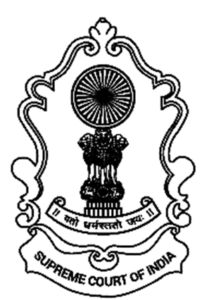
Question 1: Notice the logo of the Supreme Court of India. What are the elements familiar to you? Notice the Sanskrit motto, 'yato dharmastato jayah' — 'Where there is dharma, there is victory.
Detailed Symbolism Analysis:
- Ashoka Chakra (Wheel of Law): Positioned at the apex of the logo, representing the eternal wheel of righteousness, truth, and continuous motion toward national progress (derived from the Sarnath Lion Capital of Ashoka).
- Sanskrit Motto ('yato dharmastato jayah'): Inscribed at the base, meaning 'Where there is Dharma (truth, duty, righteousness), there is Victory.' It reminds judges, lawyers, and citizens that truth and righteousness will ultimately prevail over injustice.
- Design Inscription: Features the official seal and emblem of India, embodying authority, constitutional sovereignty, and judicial majesty.
Questions and activities :
Question 1: Write a model letter to the High Court or Supreme Court about a current social issue you have observed to bring it to the notice of the judiciary.
Model PIL Letter / Petition Format:
| To,
The Hon’ble Chief Justice, High Court of Bombay, Mumbai.
Subject: Request to take cognisance of unsafe and polluted drinking water in our village.
Respected Sir/Madam, I am a student of Class 8 and write to bring to the Hon’ble Court’s notice a serious issue affecting the Right to Life under Article 21. Effluents from a factory are being discharged into the river that people in our village use for drinking and irrigation. The water has turned brownish and foul-smelling, and many residents, including children and the elderly, have fallen ill. The affected villagers are poor and unaware of legal remedies. I humbly request the Court to treat this letter as a Public Interest Litigation, call for a report from the Pollution Control Board, direct the factory to stop discharging untreated effluents, and ensure safe drinking water for the villagers. Thanking you, Yours faithfully, [Name], Class 8, [School], [Date] |
Question 2: Imagine that you are part of the legislature or executive. Given the large number of cases in the judicial system, what are some innovative solutions that you can devise to address the issue?
Comprehensive Policy Recommendations (Legislative & Executive Perspectives):
- Mandatory Pre-Litigation Mediation: Pass legislation making pre-litigation mediation mandatory for commercial, property, and matrimonial disputes under The Mediation Act, 2023, ensuring that only unresolved disputes enter courtrooms.
- Expanding & Modernizing Infrastructure (e-Courts): Allocate executive funds for digital infrastructure—expanding Hybrid Hearings, Virtual Justice Clocks, AI-assisted legal translation, and the National Judicial Data Grid (NJDG) for real-time tracking.
- Increasing Judicial Cadre Strength: Increase the sanctioned strength of subordinate court judges, fill existing judicial vacancies promptly, and establish Fast-Track Courts for under-trial prisoners and petty offences.
- Strengthening Alternative Tribunals: Establish specialized administrative, environmental, and consumer tribunals (NCLT, NGT, Consumer Fora) at district levels to offload routine litigation from High Courts.
- Modernizing Criminal Procedure: Fully implement the 2023 criminal law reforms (Bharatiya Nagarik Suraksha Sanhita, 2023) to mandate time-bound investigation, electronic evidence submission, and summary trials.
Question 3: Create a moot court and enact the following cases. What are the considerations that the judge might need to take into account to arrive at a just outcome?
Case 3.1: Anita vs. Factory Management (Equal Pay for Equal Work)
Fact Scenario: Anita and Sameer both completed ITI diplomas and joined a screw factory together. Anita discovered she received lower pay than Sameer for identical work. After unheeded appeals to her boss, she filed a court case.
Litigants' Perspectives & Legal Outcome:
- Anita's Argument (Petitioner): Demonstrates that she possesses identical educational qualifications (ITI diploma), perform identical duties and hours, and produces equal output. Wage disparity based on gender violates Constitutional Article 39(d) ('Equal pay for equal work') and Article 15 (Prohibition of discrimination).
- Employer's Argument (Respondent): Might claim market factors or negotiation differences, which are invalid grounds under Indian labor law.
- Judge's Considerations & Verdict: The Judge will rule in favor of Anita. The court will order the factory to pay wage arrears with interest and standardize equal salary scales under the Equal Remuneration Act / Code on Wages.
Case 2: Village River Pollution Case (Factory Effluents)
Fact Scenario: Clear river water turned brown and smelly due to upstream factory discharge, causing village illness.
Step-by-Step Action Plan for Village Residents:
- Step 1: Evidence Collection & Documentation: Collect water samples, record photographs/videos of effluent discharge, and gather medical reports of affected villagers.
- Step 2: Representation to Pollution Control Board: Submit a formal written petition to the State Pollution Control Board demanding immediate factory inspection.
- Step 3: Filing a Public Interest Litigation (PIL): File a PIL petition in the High Court under Article 226 or approach the National Green Tribunal (NGT) under the NGT Act, 2010.
- Step 4: Judicial Relief Expected: Court orders an immediate closure notice to the polluting unit until an Effluent Treatment Plant (ETP) is installed, imposes heavy fines under the 'Polluter Pays Principle', and awards medical compensation to villagers.
Question 4: Many eminent individuals from across India have served as Supreme Court or High Court judges. Write an essay about one such individual from your state or district, talking about their contributions
Model Essay: Justice H.R. Khanna — Champion of Judicial Independence & Fundamental Rights
Justice Hans Raj Khanna (1912–2008) stands as one of the most distinguished jurists in the history of the Indian judiciary. Serving as a Judge of the Supreme Court of India, his judicial career exemplifies unwavering integrity, legal brilliance, and an indomitable commitment to safeguarding civil liberties.
Justice Khanna's most monumental contribution was his historic dissenting judgment in the landmark ADM Jabalpur v. Shivkant Shukla case (1976), commonly known as the Habeas Corpus case during the Emergency. While the majority bench held that fundamental rights could be suspended, Justice Khanna courageously dissented, ruling that "Life and personal liberty are not the bounties of a statute; the State has no power to deprive a person of his life or liberty without the authority of law." His courageous stance cost him the post of Chief Justice of India, but established him as an immortal symbol of judicial independence.
Furthermore, Justice Khanna played a pivotal role in formulating the 'Basic Structure Doctrine' in the landmark Kesavananda Bharati case (1973), establishing that Parliament cannot alter the core constitutional values of democracy, secularism, and judicial review. His legacy continues to inspire generations of law students, judges, and citizens across India.
Question 5: Have an interaction with anyone you know who is a part of the judicial system. Try to understand their work, the challenges they face, and what gives them satisfaction. Create a small presentation and share it with the class.
Structured Interview Framework & Class Presentation Outline:
- Target Interviewee Roles: Advocate, District Court Clerk, Public Prosecutor, or Retired Judicial Officer.
- Recommended Interview Questionnaire:
- Daily Work Routine: 'What does a typical working day look like, from studying case briefs to court appearances?'
- Major Professional Challenges: 'What are the biggest hurdles faced, such as case backlogs, client communication, or procedural delays?'
- Source of Personal Satisfaction: 'What aspect of your work brings you the greatest sense of fulfillment?' (e.g., helping an innocent person secure justice, settling family disputes amicably).
- 4-Slide Presentation Structure for Class Sharing:
- Slide 1 (Introduction): Title of the interview, profile of the legal professional, and area of practice.
- Slide 2 (Core Responsibilities): Summary of daily tasks, legal research, court filings, and client counseling.
- Slide 3 (Challenges & Solutions): Analysis of court backlogs and how digital tools (e-filing, online case status) are making work easier.
- Slide 4 (Key Takeaways): Personal learnings regarding the vital role of legal professionals in sustaining constitutional justice.
We reply to valid query.