Notes
Topics to be Learn :
|
Stages of Human Life :
Human life is divided into stages: infancy, childhood, adolescence, adulthood, and old age. Each person goes through these stages at their own speed. The time spent in each stage can be different for different people.
Growth from Infancy to Childhood :
- From birth to about 10–12 years, the main changes are in height and weight.
- Children grow taller and stronger during this period.
Defining Adolescence and Puberty :
(i) Adolescence (10–19 Years) : Adolescence is the stage of life when the body changes and becomes ready for reproduction.
- It is a natural and gradual process.
- It usually begins around the age of 10 and continues till 19 years.
- People in this age group (13–19 years) are often called teenagers.
Preparation for Adulthood :
- During adolescence, the body prepares for adult life.
- Humans cannot reproduce at birth; they need to grow and mature first.
- After reaching maturity, the body becomes capable of reproduction.
(ii) Puberty :
- Puberty is the period when the body shows specific internal and external changes.
- These changes make a person capable of reproduction.
- Puberty ends when a person reaches full reproductive maturity.
Mechanism of Puberty :
- The changes during puberty are controlled by hormones.
- Hormones are chemical substances in the body.
- Growth hormones and sex hormones play an important role.
- These hormones are released from different parts of the body after signals from the brain.
Changes During Growth :
- As humans grow, they experience physical, emotional, and behavioural changes.
- Some changes can be easily seen, like increase in height.
- Other changes happen inside the body and may not be visible.
Growing With Age: The Teenage Years
Growth of the body is an important feature of adolescence. Rapid growth happens due to growth hormones and sex hormones. Many visible and internal changes take place during this stage.
(i) Increase in Height :
- A sudden increase in height is a major change during puberty.
- The long bones of arms and legs grow longer.
- This makes a person taller.
- The rate of growth is different for each individual.
(ii) Change in Body Structure, Weight and Strength :
Physical appearance changes during adolescence. These changes are different in boys and girls.
- In boys: They gain weight. Shoulders become broader and chest becomes wider. Muscles develop more strongly.
- In girls: They gain weight and height. Breasts develop and increase in size.
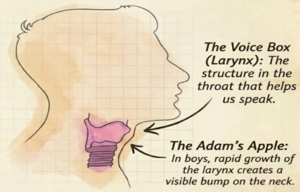
(iii) Changes in Voice : The voice box grows during puberty.
- In boys, it becomes larger and appears as the Adam’s apple. Boys develop a deeper voice.
- In girls, the voice box is smaller, so their voice remains higher pitched.
(iv) Growth of Hair on Body :
- Hair grows in areas like armpits and pubic region in both boys and girls.
- Boys may develop facial hair like moustache and beard.
- Some boys may also get hair on chest and back.
- The timing of hair growth can vary from person to person.
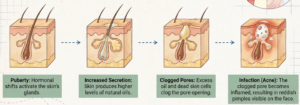
(v) Changes in Facial Skin
- Some adolescents develop pimples (acne).
- This happens due to increased oil production in the skin.
- Oil can block pores and may cause skin infections.
Sexual Characteristics :
Sexual characteristics are physical features that show whether a person is male or female. These characteristics help identify the biological sex of a person.
Types of Sexual Characteristics
(i) Primary Sexual Characteristics : These are present from birth. They directly help in reproduction.
Example:
- In males: testes
- In females: ovaries
(ii) Secondary Sexual Characteristics : These develop later during puberty. They do not directly take part in reproduction. They show that the body is becoming mature.
Secondary Sexual Characteristics in Boys :
- Growth of facial hair (moustache and beard)
- Voice becomes deeper
- Shoulders become broader
- Hair grows in armpits, chest, and pubic region
Secondary Sexual Characteristics in Girls :
- Start of menstrual cycle
- Voice remains higher pitched
- Hair grows in armpits and pubic region
Changes that Indicate Reproductive Capability :
An important change in adolescent girls is the start of the menstrual cycle, also called periods. It shows that the body has begun preparing for reproduction.
Menstruation : Menstruation is the phase when blood is discharged from the body. It usually lasts for 3 to 7 days.
Cycle Frequency : The menstrual cycle repeats after about 28 to 30 days. The timing may vary slightly from person to person.
Timeline : The start of menstruation marks the beginning of reproductive life. It usually stops naturally between the ages of 45 and 55 years. This marks the end of reproductive capability.
Hygiene During Menstruation :
- Maintaining proper hygiene is very important.
- It helps prevent infections.
- Use clean sanitary pads or reusable cloth pads.
- Change them every 4–6 hours.
- Dispose of used pads properly by wrapping them in paper.
Emotional and Behavioural Changes in Adolescents :
Adolescents experience intensified emotional states and behavioral changes as their minds and bodies prepare for adulthood.
- Mood Swings: Adolescents may feel strong emotions such as excitement, sadness, anger, or happiness more intensely than before.
- Psychological Developments: This period involves a search for identity ("Who am I?"), increased sensitivity to comments from others, and a desire for independence.
- Mental State: The body and mind are in a state of "hyperactivity," which is a normal part of growing up.
Making Adolescence a Joyful Experience :
Healthy Habits for Growth During Adolescence :
- Health means physical and mental well-being.
- Reproductive health refers to proper functioning of reproductive organs at all stages of life.
- Adolescence is a period of rapid physical and mental growth.
- Therefore, proper care of health is very important during this stage.
Meeting nutritional needs :
Adolescents need a balanced diet to stay healthy. A balanced diet includes carbohydrates, fats, proteins, vitamins, minerals, and water in the right amounts.
Proper diet helps in growth, energy, and overall development.
Important Food Groups :
- Cereals : Cereals provide carbohydrates for energy. Examples: wheat, rice, chapati, dosa.
- Protein-rich Foods : Proteins help in growth and body building. Examples: pulses (dal), paneer, meat, fish, nuts.
- Fats and Sugars : They provide energy to the body. Examples: butter, ghee, groundnuts.
- Fruits and Vegetables : They are protective foods. They provide vitamins and minerals. Examples: oranges (Vitamin C), carrot (Vitamin A).
- Iron-rich Foods : Iron helps in the formation of blood. Examples: leafy vegetables, amla, meat, jaggery (gud).
- Milk and Calcium-rich Foods : Calcium is important for strong bones and teeth. Milk is a rich source of calcium.
Essential Nutrients :
| Nutrient | Function | Common Sources |
| Proteins | Growth and strength | Milk, curd, cheese, paneer |
| Carbohydrates & Fats | Energy levels | Millets, dairy products |
| Calcium | Optimal bone growth | Milk and dairy |
| Iron | Formation of blood; prevents deficiency | Spinach, kidney beans, raisins, figs |
| Vitamins (e.g., B12) | Proper body functioning | Obtained from food (cannot be made by the body) |
Notably, scientist Dorothy Hodgkin was awarded the Nobel Prize for determining the structure of B12.
Personal hygiene :
Good personal hygiene helps protect us and others from diseases. It is very important for adolescents to follow healthy hygiene habits.
Hygiene Practices During Adolescence : Girls should take special care of cleanliness during menstruation. They should keep track of their menstrual cycle and be prepared.
- Menstrual Hygiene : Use clean sanitary pads or reusable cloth pads. Change them regularly to maintain cleanliness.
- Proper Disposal of Sanitary Products : Used sanitary pads should be wrapped in paper or newspaper. They should be thrown in dustbins properly. Biodegradable sanitary pads should be used as they are eco-friendly.
- Role of Government : The government should provide sanitary products at low cost or free. This helps improve menstrual hygiene and health awareness.
Government Initiatives :
Various initiatives support adolescent health and hygiene, particularly for girls in rural areas:
- Menstrual Hygiene Scheme (MHS): Provides free or low-cost sanitary pads to rural adolescent girls.
- Rashtriya Kishor Swasthya Karyakram (RKS): Promotes adolescent health through peer education.
- Suvidha Sanitary Napkin Initiative: Offers affordable biodegradable sanitary pads.
- State-Level Schemes: Programs like the Shuchi Scheme (Karnataka) and initiatives in Tamil Nadu and Odisha distribute free sanitary pads in government schools.
- Anaemia Mukt Bharat: A national program aimed at reducing anaemia through awareness and nutritional supplements.
Physical activities :
- Regular exercise is important to keep the body fit during adolescence.
- It helps in both physical and mental well-being.
- Activities like brisk walking, running, jogging, cycling, swimming, skipping, and dancing should be included in daily routine.
- These activities increase stamina and improve mood.
Balanced Social Life :
- Adolescents should show positive social behaviour.
- They should be thoughtful and responsible while interacting with others.
- Online platforms should be used carefully and responsibly.
- Cyberbullying and misuse of social media should be avoided.
- Personal information and photos should not be shared with strangers carelessly.
- Cyberbullying means using digital devices to harass others by sending harmful messages, spreading rumours, or sharing private information without permission.
Say ‘No’ to Harmful Substances :
- Adolescence is a time of many changes, which is normal.
- Some adolescents may feel confused or stressed, but they should not worry.
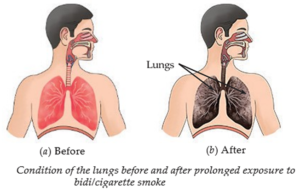
- Harmful substances like tobacco, cigarettes, and alcohol should be strictly avoided.
- These substances are addictive and harmful to health.
- They can cause problems like memory loss, breathing issues, and lung damage.
- Continuous use can lead to substance abuse.
- Proper guidance, counselling, and medical help can support those trying to overcome addiction.
The ‘Why’ Question for Adolescence :
Role of Hormones in Adolescence :
- Many changes during adolescence are controlled by hormones.
- Hormones are special chemical substances produced in our body.
- They play an important role in growth and development.
Functions of Hormones :
- Hormones regulate different body activities.
- They help in physical changes like growth, menstruation, and puberty.
- They ensure proper functioning of different body systems.
How Hormones Work :
- Hormones are produced in different parts of the body.
- They are released at the right time when the brain sends signals.
- This coordination helps the body grow and develop properly.
Effect on Mood and Behaviour :
- Some hormones also affect emotions and behaviour.
- They may cause mood swings and changes in feelings during adolescence.
- These changes are normal and part of growing up.
We reply to valid query.