Solutions (Exercise + Intext)
The Big Questions :
Question 1. What makes India’s climate so diverse?
India's climate is diverse because of several geographical and environmental factors. These include: Because of these factors, India experiences a variety of climates, ranging from cold alpine regions and hot deserts to tropical coastal areas.
Question 2. What are the monsoons? How are they formed?
The monsoon is a system of seasonal winds caused by differences in the heating and cooling of land and ocean. How they are formed : They are formed based on the principle that land heats up and cools down faster than the ocean:
Question 3. What is the effect of climate on economy, culture and society?
Climate affects many aspects of life in India.
Question 4. How can understanding the climate help us to prepare for natural disasters?
Understanding climate patterns allows for better prediction and resilience against disasters like cyclones, floods, landslides, and forest fires:
Question 5. What is climate change? What are its consequences?
Climate change refers to significant, long-term shifts in global or regional climate patterns. While natural processes once drove these shifts, since the 19th century, it has been primarily caused by human activities such as burning fossil fuels and deforestation. Consequences include:
Intext/Textbook Exercises :
Let's Explore :
Question 1. Which are your favorite seasons? Write a short essay explaining your reasons.
India experiences different seasons throughout the year. My favourite seasons are spring and autumn because the weather during these seasons is pleasant and comfortable. Spring comes after winter. The days become warmer, flowers bloom, and trees grow fresh green leaves. The surroundings look colourful and beautiful. The weather is neither too hot nor too cold, which makes outdoor activities enjoyable. Autumn comes after the rainy season. The sky becomes clear, the air feels fresh, and the weather is cool and pleasant. It is a beautiful season with bright sunshine and comfortable temperatures. Many important festivals are also celebrated during this time. I like spring and autumn because they are peaceful, refreshing, and enjoyable. These seasons make nature look beautiful and allow people to spend more time outdoors. Therefore, spring and autumn are my favourite seasons in India.
Question 2. Do you know which trees in your area change colours before the onset of winter? Are there trees that shed their leaves around this time? Why do you think this happens?
Yes. In and around my area, many trees show seasonal changes before winter, although the effect is usually less dramatic than in colder countries. Some common trees around my area whose leaves may turn yellow, golden, reddish, or brown before falling include: Trees That Shed Their Leaves Yes. Many trees in my area are deciduous, meaning they shed their leaves during the dry season (often from late autumn to early spring). Examples include: Why Does This Happen? Trees shed their leaves mainly to:
Question 3. Udhagamandalam (Ooty) and Colmbatore are almost at the same altitude. The range of summer temperatures in Ooty is 10 - 25 while that in Coimbatore is 25 - 38. Why do you think there is such a difference in temperature between these two places?
Question 4. Since the ability to predict the monsoon rainfall has been an important aspect of life in India, our ancestors observed Nature around them carefully. They developed local traditional knowledge through their experience. This traditional knowledge is an Important heritage we must preserve. For example, fishermen on the Konkan coast predict the onset of the monsoon when fishes that normally stay under water are seen at the surface; In parts of southern India monsoon is said to arrive within 50 days after the Golden Shower tree (Cassia fistula) blossoms. Some communities also believe that when crows build their nests high on tree-tops, It indicates less rainfall, whereas If the nests are lower, rainfall is likely to be heavy. Make a list of such local knowledge about rain, fog, snow or hail in your area.
People have observed signs in nature for centuries to predict rain. Some common indicators are: These natural signs are not always accurate, but they have been used by farmers and local communities for generations to predict rainfall.
Question 5. Have you seen or read about floods? Look at the physical map of India. Discuss in pairs why you think floods occur in the areas mentioned above.
Yes, I have read about floods and seen pictures of them. Floods can cause severe damage to homes, roads, crops, and property. I looked at the physical map of India and discussed with my friend why floods occur in states like Uttar Pradesh, Bihar, Kerala, Andhra Pradesh, and Assam.
Question 6. Observe Fig. 3.15. Describe the effects they may have on people, plants, animals and economic life.
Figure 3.15 illustrates four major climate-related disasters: landslides, floods, cyclones, and forest fires. These events have wide-ranging and often devastating consequences across various aspects of life: Effects of Natural Disasters
Let's Remember :
Question 1. We studied about latitudes in Grade 6. Do you remember that latitudes measure the distance from the Equator, increasing as we move away from It (either Northward or Southward)? While the climate around the Equator is extremely hot, as the latitude increases it becomes temperate and then cold or frigid. Why is this so?
Yes I do remember. As we move away from the Equator, the Sun's rays strike the Earth at a lower angle. Near the Equator, the Sun's rays are direct and concentrated, so temperatures are higher. At higher latitudes, the rays spread over a larger area and become less intense. They also pass through a thicker layer of the atmosphere, which reduces their heating effect. As a result, places farther from the Equator have cooler climates than places near the Equator.
Questions and activities :
Question 1. Match the climatic factors with their effects:
| Column A | Column B |
| (1) Latitude | (a) Brings wet air to India during summer |
| (2) Altitude | (b) Creates different climates in the north and south |
| (3) Proximity to the ocean | (c) Keeps higher places cooler |
| (4) Monsoon winds | (d) Moderates the temperature |
Column A (Factor)
Column B (Effect)
(1) Latitude
(b) Creates different climates in the north and south
(2) Altitude
(c) Keeps higher places cooler
(3) Proximity to the ocean
(d) Moderates the temperature
(4) Monsoon winds
(a) Brings wet air to India during summer
Question 2. Answer the following questions:
(a) What is the difference between weather and climate?
(b) Why do places near the ocean have milder temperatures than places far away from it?
The sea acts as a moderator for temperature because land and water heat up and cool down at different rates.
(c) What role do monsoon winds play in affecting India’s climate?
Monsoon winds are seasonal winds that dictate the timing of rainfall and seasonal transitions in India.
(d) Why is Chennai warm or hot throughout the year, while Leh is cold?
This difference is caused by both latitude and altitude:
Question 3. Look at a map of India given at the end of this book. Identify the climate for these cities — Leh, Chennai, Delhi, Panaji and Jaipur.
- Is the place near the sea, in the mountains, or in the desert?
- How do these factors affect the climate there?
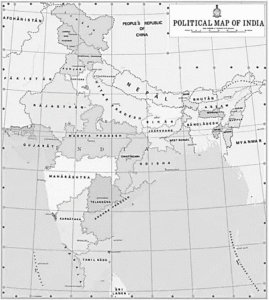
(1) Leh : (2) Chennai : (3) Delhi : (4) Panaji : (5) Jaipur :
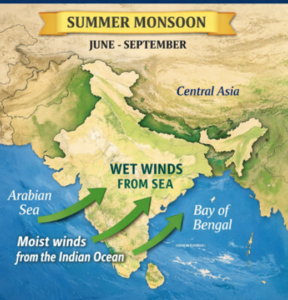
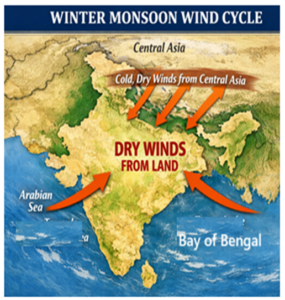
Question 4. Draw the monsoon cycle in summers and winters on a map of India.
- Label where the winds blow in summer and winter
- Show the direction of winds during the monsoon
Question 5. Make a colourful poster showing festivals in India linked to farming and weather (e.g., Baisakhi, Onam). Add pictures or drawings of these festivals.
Student should do it by self
Question 6. Imagine you are a farmer in India. Write a short diary entry about how you would prepare for the rainy season.
June 1, 2026 This summer has been very hot. Today, I saw the Golden Shower tree covered with yellow flowers. My elders say this means the rainy season will arrive soon. I also noticed that crows are building their nests lower in the trees, which may mean there will be heavy rain. I have started preparing my fields for the monsoon. Today, I ploughed the fields and removed weeds so that the soil is ready for sowing seeds. I also cleaned the irrigation channels and checked the storage area for seeds and fertilizers. I have started repairing the fences around the farm to protect the crops from animals. I hope the monsoon arrives on time and brings enough rain for a good harvest. Like every year, I am looking forward to a successful farming season. Farmer
Question 7. Identify a natural disaster (e.g., cyclone, flood, landslide, or forest fire) and write a short essay that includes the causes and impacts. Suggest actions that individuals, communities and the government can take to reduce the impact.
Floods: Causes, Impacts and Prevention Floods are one of the most common natural disasters. They occur when excess water covers land that is normally dry. Heavy rainfall, overflowing rivers, cyclones, and poor drainage systems are some major causes of floods. Human activities such as deforestation and construction on riverbanks can also increase the risk of flooding. Floods can cause great damage to life and property. Houses, roads, and crops may be destroyed. People may lose their homes and livelihoods. Floods can also spread diseases by contaminating drinking water. To reduce the impact of floods, individuals should avoid throwing waste into drains and follow weather warnings. Communities can keep drainage systems clean, plant more trees, and participate in disaster preparedness programs. The government can build strong flood-control structures, improve drainage systems, provide early warning systems, and enforce proper land-use planning. By working together, individuals, communities, and the government can reduce the damage caused by floods and protect lives and property.
We reply to valid query.